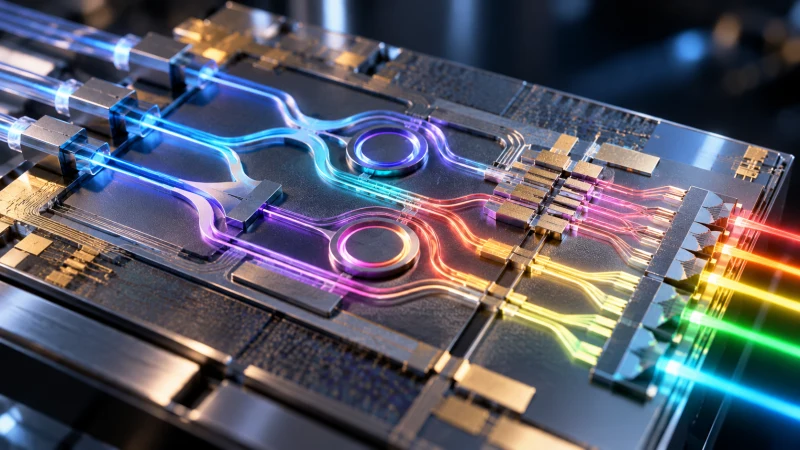
Lambda is deploying NVIDIA Photonics co-packaged optics (CPOco-packaged opticsOptical devices and CPUs are integrated into a single package) switches to connect GB300GPU-based system architectureGB300 denotes a GPU-based system architecture for data center and accelerator platforms. NVL72 racks in an AIartificial intelligenceAI stands for artificial intelligence factory with more than 10000 GPUgraphics processing unitA GPU is a parallel graphics processor widely used for AI acceleration.s. The goal is to provide a network that is fast enough for large-scale model training while improving power efficiency and resilience at the same time.
The switches replace pluggable transceivers with optical engines co-packaged on the switch package. According to the deployment results, this approach delivers up to 5x better power efficiency and up to 15x higher reliability than conventional pluggable optics. It also uses 4x fewer lasers, reducing the number of components that can fail.
In Lambda’s tests, network latency fell by about 4 % at rack scale and by up to about 10 % at pod scale. Across rack, scalable unit and pod configurations, throughput remained at the level of conventional pluggable optics.
Each switch has 144 ports running at 800 Gb/s. Liquid cooling removes heat from the switch chip and optical engines. The reported median optics temperature is 36 °C, compared with 51 °C for conventional pluggable optics, and the tests also found more stable signal integrity.
The co-packaged design brings electrical-to-optical conversion closer to the switch chip. Each switch includes 18 removable external light sources that feed the optical engines, while the optical engines sit beside the chip on the same package and convert electrical signals into light for transmission over fiber.
Because the light-source modules can be replaced in the field, technicians do not have to replace the entire module if a laser fails. The shorter electrical path, reduced from inches to millimeters, also lowers signal loss.
By eliminating retimer chips, the design cuts both power draw and the number of parts in the signal path. The deployment is aimed at keeping network interruptions from stalling large GPUgraphics processing unitA GPU is a parallel graphics processor widely used for AI acceleration. clusters and at limiting the latency impact of disruptions in agentic inference workloads.