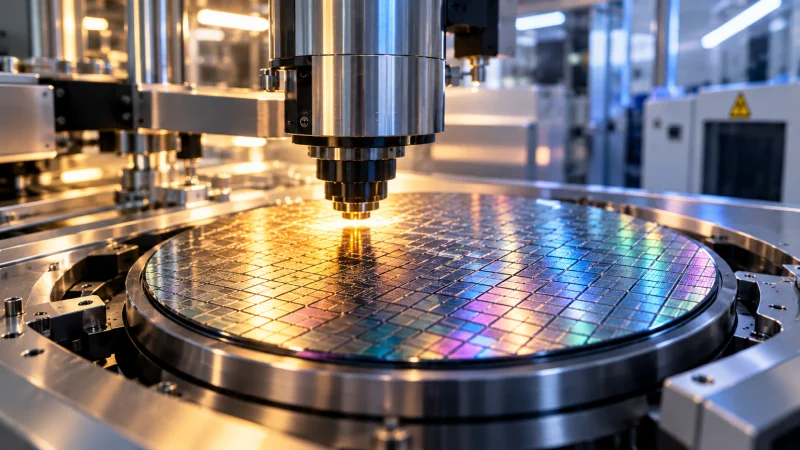
Semiconductor fabs are pushing advanced process control deeper into the process module, using real-time equipment sensor data and AI/ML inference models to spot yield excursions earlier. That shift-left approach can move detection from downstream screening into the tool itself, allowing process settings to be adjusted or a run to be aborted before more scrap is created.
The data load behind this approach is rising sharply. Increased inspection and metrology sampling, together with streaming sensor data from equipment, has driven some fabs to collect hundreds of petabytes per year. Equipment data now grows along several axes at once: more parameters, higher sampling rates that have moved from roughly once per second to tens of milliseconds, and greater use of raw trace data instead of summary values.
That creates a practical limit on how much information can be used in real time. Process modules may need sub-second processing, while certain sources such as RF1. radio frequencyHigh-frequency electromagnetic oscillations used, for example, to excite plasmas.2. resonance frequencyQuantity describing a signal’s frequency, bandwidth, spectral behavior or transmission rate. plasma systems in etch or CVDchemical vapor depositionThin-film deposition using chemical reactions of gaseous precursor materials. tools can generate megabytes per second of waveform-level data. Not every pulse can be monitored, even when pulse shape, transient response and droop may carry process-relevant signals. As a result, fabs and suppliers are deciding which data to expose, preserve and analyze.
The same shift-left logic is also changing how fabs think about screening and traceability. Inspection, metrology and test remain important checkpoints, but they now also feed model improvement. To support virtual metrology and root-cause analysis, equipment logs need to be available in standard formats and linked to wafer or panel context across process steps.
That requirement creates tension between local optimization and enterprise-wide context. Process modules are increasingly optimized for their own timing and control constraints, but AI/ML models still depend on trustworthy, connected data to stay effective. Without preserved traceability, fabs risk ending up data rich but context poor, even as they try to use in-situ analytics to improve yield, stability and overall equipment effectiveness.