Short updates from the semiconductor industry, with context and links to the relevant chapters.
October 20, 2026
Research
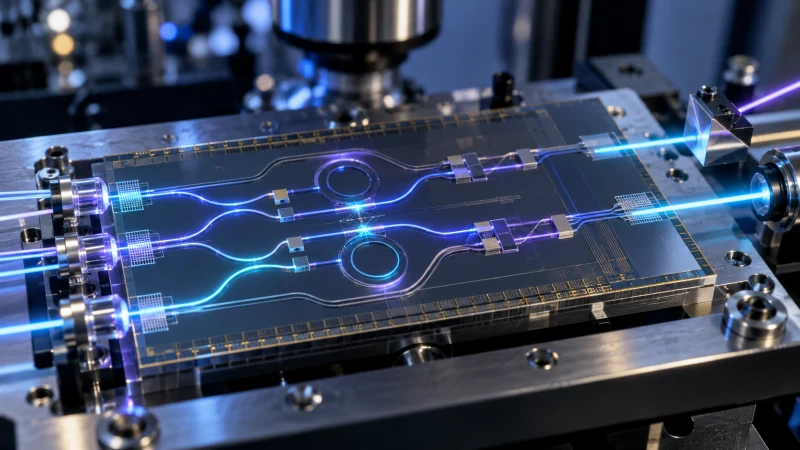
ASML and Xanadu are examining whether tighter lithographic control can reduce photon loss in photonic quantum processors. The work ties optical loss to line-edge roughness, sidewall profile, process variability and pattern-transfer effects, with the goal of improving the prospects for fault-tolerant photonic hardware.
Read more →
·
Photolithography
October 20, 2026
Industry & People
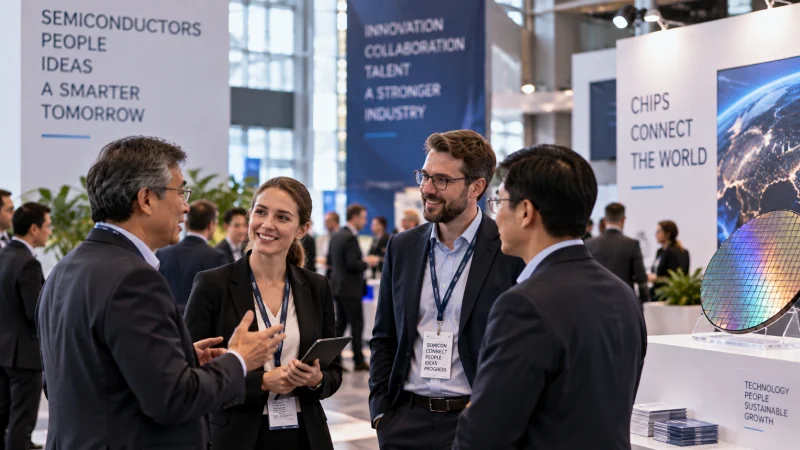
Singapore is tying together chip research, startups, and manufacturing with platforms for SiC power devices, metalenses, and silicon photonics. A*STAR, MetaOptics, Advanced Micro Foundry, and GlobalFoundries illustrate how deep-tech work can move from laboratory development into industrial-scale production.
Read more →
·
How Does It Work?
October 20, 2026
Devices & Products
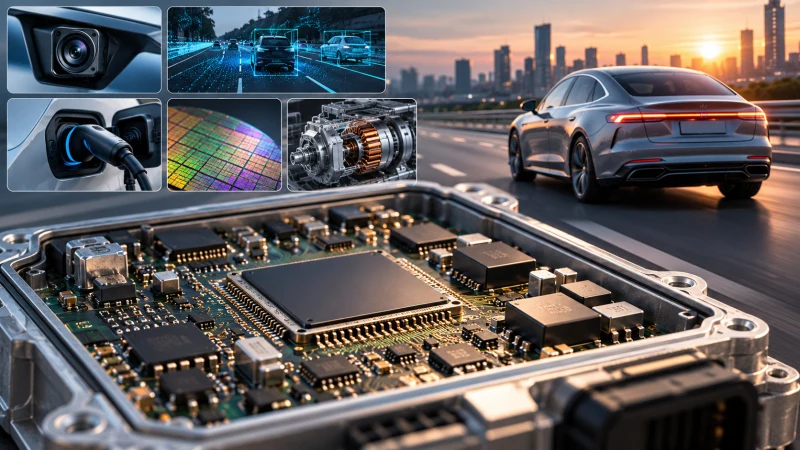
A discrete automotive sensor supply design removes the usual DC-DC pre-regulator and instead keeps the linear pass stage off for most of the time. A CPU pin both monitors the output and disables the supply, while a transistor-based short-circuit trip and automotive battery protection remain in place.
Read more →
·
How Does It Work?
October 21, 2026
Manufacturing & Processes
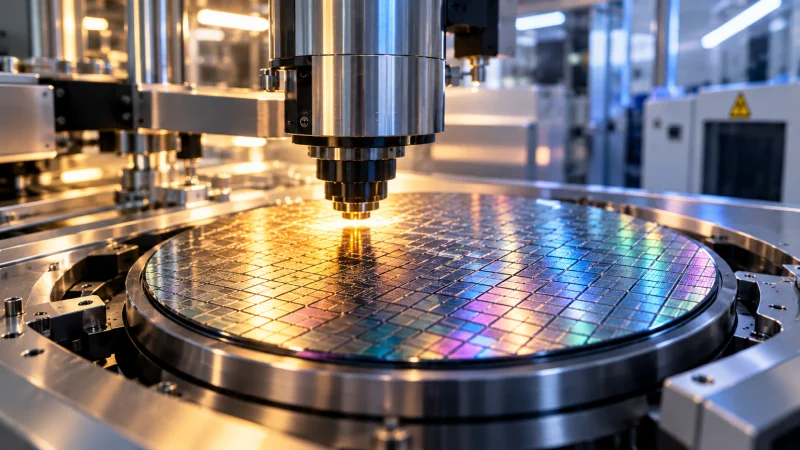
High-volume testing for co-packaged optics is being pushed beyond single-die operation, but fiber alignment remains the main bottleneck. At the same time, connector durability, warpage, and the need to combine optical and electrical measurements are making production test architectures more complex.
Read more →
·
Optoelectronics & Photonics

October 21, 2026
Artificial intelligence
ChipAgents and NVIDIA have introduced Build-A-Chip-Bench, an end-to-end benchmark for AI agents that stretches from specification to verified GDS in digital IC design. The setup tests not only RTL correctness, but also whether an agent can preserve behavior while meeting timing, area, power, and routing constraints across synthesis and physical implementation.
Read more →
October 21, 2026
Companies & Market
Infineon, Microsoft, NVIDIA and UnternehmerTUM Accelerator have launched the Physical AI Growth Lab, an equity-free program for European physical AI, robotics and industrial AI startups. The initiative combines hardware access, cloud and AI infrastructure, mentoring and investor links to help selected teams move from prototype to commercial scale.
Read more →
October 21, 2026
Companies & Market
Synaptics has introduced the Astra SR200 series, an MCU family that combines Arm Cortex-M85 and Cortex-M52 cores with up to 400 GOPS of AI acceleration, 256 MB of custom DRAM and hardware security. The company positions the devices as an xMCU class aimed at running larger edge-AI models and multimodal workloads directly on the device.
Read more →
·
How it works
October 21, 2026
Manufacturing & Processes
As five semiconductor plants in India enter commercial production, OSATs are under pressure to secure enough test capacity for a wider mix of devices. NI says Kaynes Semicon has chosen its Semiconductor Test System, while other Indian OSATs are still qualifying equipment and evaluating test architectures for both legacy parts and new designs.
Read more →
·
Wafer Fabrication

October 22, 2026
Research
At SPIE Photomask Technology + Extreme Ultraviolet Lithography, an expert panel argued that edge placement error is no longer just a lithography metric. The discussion tied EPE to mask structure, scanner behavior, resist variability, etch, metrology, OPC, and downstream integration, and called for richer measurements, explainable AI, and cross-domain workflows to improve manufacturability and yield.
Read more →
·
Fundamentals
October 22, 2026
Research
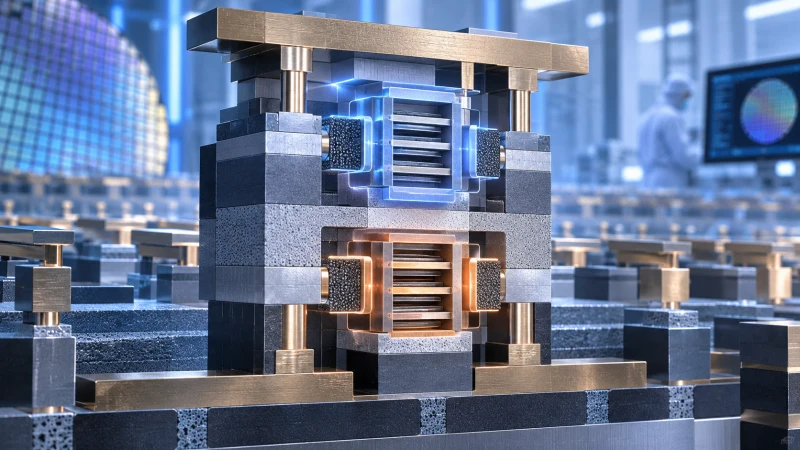
A proposed self-aligned complementary FET architecture stacks NMOS and PMOS devices vertically to push density past the limits of conventional GAA nanosheets. Digital twin simulation shows a 6T SRAM bit cell of 0.0094 µm², a 52.7% area reduction versus N3, and at least a 10 nm overlay window on critical contact layers.
Read more →
·
Fundamentals
October 22, 2026
Manufacturing & Processes
Multi-chip and stacked-die designs are becoming a main route for continued scaling in AI and HPC, but they also raise current density, multiply voltage domains, and tighten power-delivery constraints inside the package. Intel Foundry is advancing integrated voltage-regulation options, including FIVR, CoaxMIL magnetic inductors, and the capacitor-based C2VR approach, to move conversion closer to the load and improve power integrity.
Read more →
·
Advanced Packaging
October 22, 2026
Industry & People
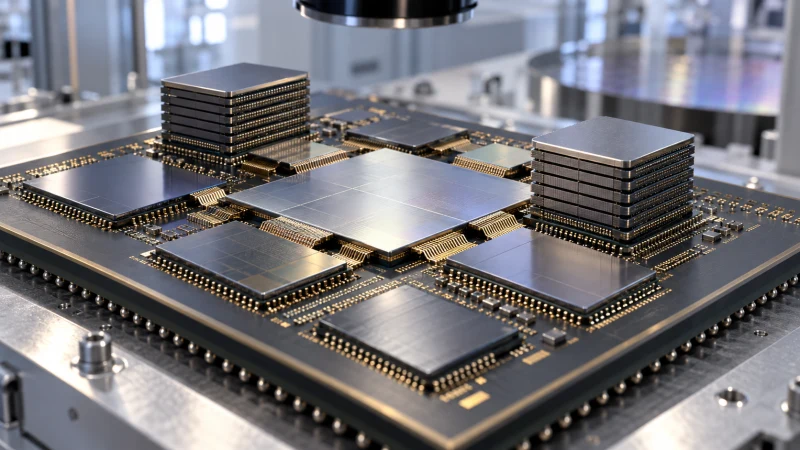
Advanced packaging is pushing foundries and OSATs into each other’s territory. The overlap is strongest in 2.5D integration and panel-level assembly, where lithography-like materials, finer RDL features, and new equipment are moving into packaging lines. Hybrid bonding remains mostly a foundry activity for now, but it is already being positioned as a future spillover area as capacity tightens.
Read more →
·
Advanced Packaging
October 22, 2026
Research
Traditional Process, Voltage and Temperature characterization is no longer enough to describe how modern processors behave under real operating conditions. A workload-aware extension, PVTW, adds a fourth axis: the specific compute, memory or I/O stress applied to the device while voltage and frequency margins are swept.
Read more →
·
How It Works
October 22, 2026
Manufacturing & Processes
SEMICON West 2026 highlighted smart manufacturing themes such as digital twins, agentic AI and physical AI, while PDF Solutions prepared demonstrations of Exensio Aurora for semiconductor manufacturing and supply-chain analytics. The central issue is no longer whether AI can surface useful recommendations, but how fabs define when those recommendations may become authorized actions, who approves them, and how each escalation is documented.
Read more →
·
How does it work?
October 22, 2026
Artificial intelligence
Deepx is pairing low-power NPUs with an open software ecosystem, aiming to make physical AI easier to prototype, deploy, and scale across cameras, robots, drones, and industrial systems. The company is tying its hardware to familiar frameworks and distribution channels to reduce the gap between proof of concept and production.
Read more →
·
Devices